

Introduction
A stock buyback (also called a share repurchase) occurs when a company buys back its own shares from the open market. This reduces the number of outstanding shares, often leading to an increase in share price. Companies use buybacks to return value to shareholders, boost earnings per share (EPS), or signal confidence in their financial health.
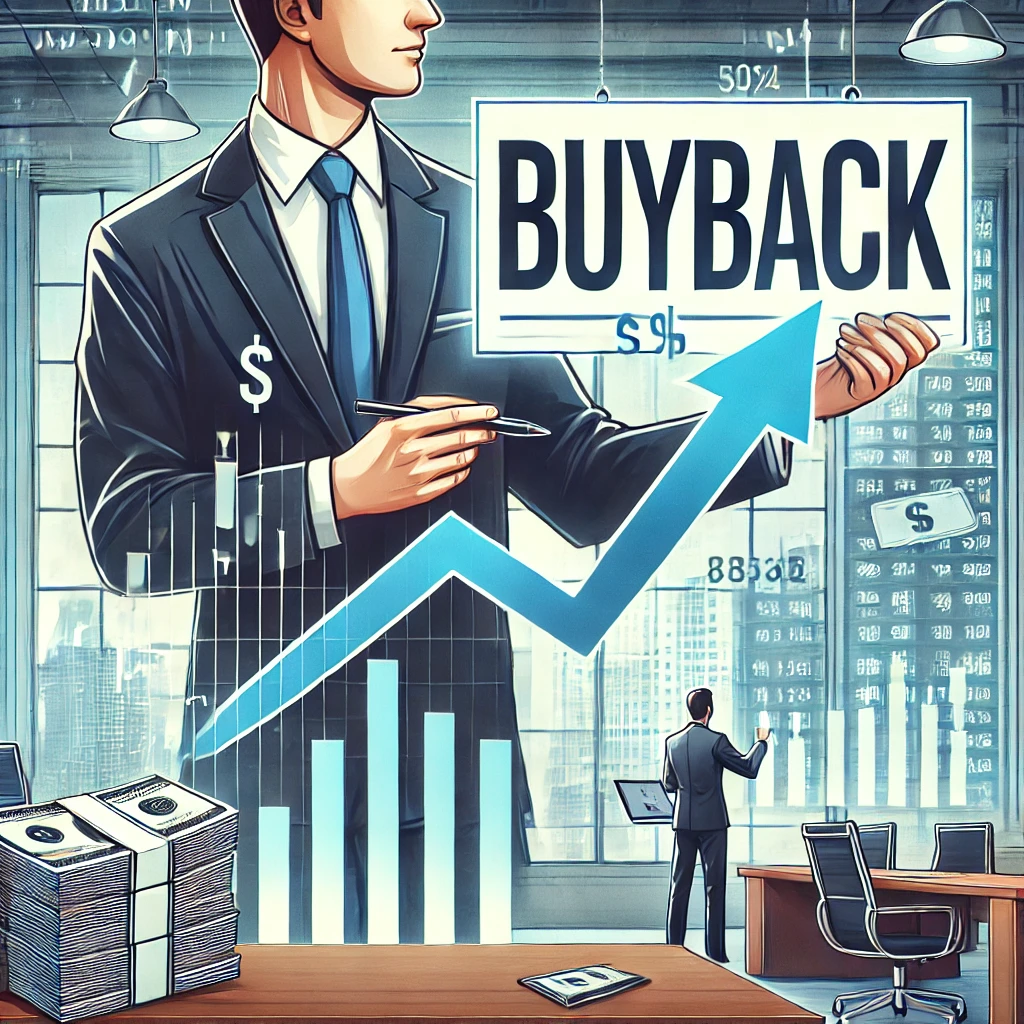
How Buybacks Affect Share Prices
- Short-Term Impact: Buybacks create demand for the stock, which often causes a short-term price increase.
- Long-Term Impact: Fewer shares in circulation can improve EPS and attract more investors. However, buybacks done at inflated prices may not always benefit shareholders.
- Example: Apple and TCS have used buybacks effectively to boost investor confidence.
Trading Strategies After a Buyback
- Pre-Buyback Rally: Stocks often rise after a buyback announcement due to investor excitement.
- Post-Buyback Trend: Monitor whether the company is genuinely strong or just using buybacks to mask poor performance.
- Entry/Exit Timing: Traders can enter after a buyback announcement and exit when the stock reaches overbought levels.
Risks & Red Flags
- Debt-Funded Buybacks: If a company takes on debt for buybacks, it may weaken financial stability.
- Market Manipulation: Some companies use buybacks to artificially inflate stock prices without real business growth.
Conclusion
Stock buybacks can be a great opportunity for traders and investors, but it’s crucial to analyze the financials behind them. Always check why a company is buying back shares before making an investment decision.

Leave a Reply