

Introduction
In the unpredictable journey of life, uncertainty is the only certainty. From health issues and accidents to natural disasters and economic disruptions, risks are omnipresent. These risks, if not managed properly, can lead to severe financial setbacks. That’s where insurance steps in-as a safety net that cushions individuals, families, and businesses against unexpected losses.
Insurance, in its simplest form, is a mechanism of risk transfer. It allows you to pay a relatively small premium today to protect yourself from potentially significant financial losses tomorrow. Despite its importance, many people overlook insurance or misunderstand its role. In this blog, we’ll demystify insurance, explore its types, dive into how it works, and explain why it’s indispensable in personal and financial planning.
What Is Insurance?
At its core, insurance is a contract between an individual or entity (the insured) and an insurance company (the insurer). The insured pays a premium in exchange for financial protection against specified risks. If the covered event occurs-such as an accident, illness, or fire-the insurer compensates for the losses as per the policy terms.
This system is built on the principle of risk pooling. Thousands of people pay premiums, and only a few make claims. This pooling allows insurance companies to cover large claims without going bankrupt.
Why Is Insurance Important?
Many view insurance as just another expense. However, this perception changes the moment a covered event occurs. The importance of insurance lies in its ability to provide:
- Financial Security: It safeguards your income, assets, and lifestyle against unpredictable setbacks.
- Peace of Mind: Knowing that you are protected against financial ruin helps reduce stress.
- Wealth Preservation: Insurance ensures that one major incident doesn’t wipe out years of savings.
- Business Continuity: For companies, insurance minimizes operational disruptions and liability risks.
Types of Insurance
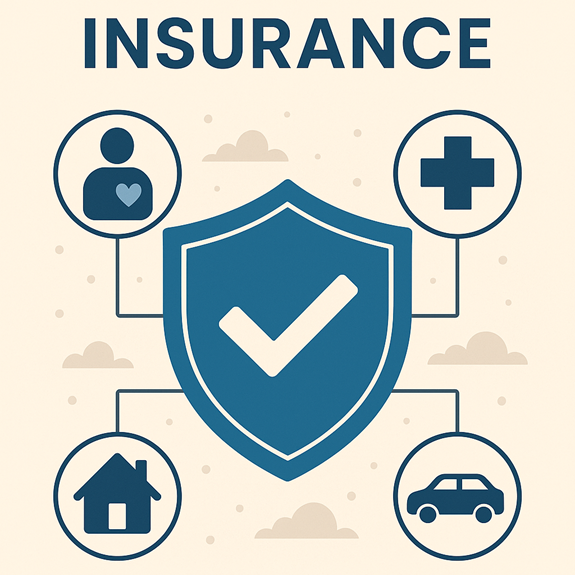
Understanding different types of insurance helps you make informed decisions based on your needs. Let’s explore the major categories:
1. Life Insurance
Life insurance is perhaps the most fundamental type. It provides a death benefit to the nominee if the insured person dies during the policy term. It is essential if you have dependents who rely on your income.
Main types include:
- Term Life Insurance: Offers coverage for a specific period. It’s affordable and straightforward.
- Whole Life Insurance: Provides lifelong coverage along with a savings component.
- Endowment Plans: Combine insurance and investment, maturing after a set time.
Why you need it: Life insurance ensures your family doesn’t face financial hardship in your absence. It covers debts, living expenses, and even your children’s education.
2. Health Insurance
Medical costs have skyrocketed in recent years. Health insurance covers hospitalization, treatments, and other medical expenses. With rising lifestyle diseases, it has become more of a necessity than a luxury.
Variants include:
- Individual Plans
- Family Floater Plans
- Critical Illness Cover
- Top-up Plans
Tip: Opt for a comprehensive plan early in life. Premiums are lower, and you avoid issues related to pre-existing conditions.
3. Motor Insurance
In many countries, having motor insurance is a legal requirement. It covers damages to your vehicle, third-party liabilities, and injuries due to road accidents.
Two main types:
- Third-party Insurance: Covers damages to other vehicles or property.
- Comprehensive Insurance: Covers third-party liabilities and damages to your own vehicle.
Why it matters: It protects you from the high costs of repairs and legal liabilities in case of an accident.
4. Home Insurance
Your home is probably your biggest investment. Home insurance protects it from disasters like fire, theft, floods, and earthquakes.
Coverage includes:
- Structure of the house
- Contents within the house
- Additional living expenses (if you are forced to move temporarily)
Peace of mind: You can rebuild your life without financial devastation if a catastrophe strikes.
5. Travel Insurance
When you travel- especially internationally- travel insurance covers risks like flight cancellations, medical emergencies, lost baggage, and trip curtailments.
Variants:
- Single-trip vs. Multi-trip
- Domestic vs. International
Extra benefit: Many visa processes require proof of travel insurance.
6. Business Insurance
Businesses face unique risks like property damage, lawsuits, cyberattacks, and employee injuries. Business insurance provides customized solutions to ensure continuity and compliance.
Common types:
- Property Insurance
- Liability Insurance
- Worker’s Compensation
- Business Interruption Insurance
How Does Insurance Work?
Understanding how insurance works helps you use it effectively.
The Premium
The premium is the amount you pay for coverage. It depends on various factors, including age, health, occupation, risk level, and type of coverage.
The Policy
The policy is a legal contract detailing the terms of coverage, inclusions, exclusions, and claim procedures. Reading it carefully prevents surprises during claim settlement.
Claim Settlement
When a covered event occurs, you file a claim. If it’s valid, the insurer processes the claim and disburses the amount as per the policy. Good insurers have efficient processes, ensuring timely settlements.
Choosing the Right Insurance
With so many options available, how do you choose the right insurance?
Here are some tips:
1. Assess Your Needs
Start by analyzing your life situation. Do you have dependents? What are your health risks? Do you own a car or a home? This self-assessment will help prioritize which policies you need.
2. Compare Policies
Don’t buy the first policy you come across. Compare premium rates, coverage limits, exclusions, claim ratios, and reviews. Online platforms can simplify this process.
3. Check the Claim Settlement Ratio
A high claim settlement ratio indicates that the insurer pays most of the claims it receives. It’s a sign of reliability.
4. Understand the Fine Print
Always read the terms and conditions. Many claims are rejected due to overlooked clauses or misunderstood exclusions.
Insurance and Tax Benefits
Insurance not only provides financial protection but also offers tax advantages. In India, for example:
- Under Section 80C, life insurance premiums are deductible up to ₹1.5 lakh per year.
- Section 80D offers deductions on health insurance premiums.
- Maturity proceeds from life insurance policies may be tax-free under Section 10(10D), subject to conditions.
These benefits make insurance an attractive part of tax planning as well.
Common Myths About Insurance
Despite its advantages, many people hesitate to invest in insurance due to common myths. Let’s bust a few:
1. “I’m young and healthy. I don’t need insurance.”
Actually, younger people get better premiums. Plus, life and health risks can arise anytime.
2. “It’s too expensive.”
Many plans are highly affordable, especially term insurance. Skipping a few luxury expenses can cover your premium.
3. “My company provides health insurance.”
Corporate plans may not be enough. They often have lower coverage and are job-dependent.
4. “Insurance is an investment.”
Some policies mix insurance and investment, but pure insurance (like term plans) serves protection, not wealth creation.
The Role of Insurance in Financial Planning
Insurance is a cornerstone of any sound financial plan. It complements your savings, investments, and retirement goals by protecting them from being derailed.
Here’s how:
- Emergency Coverage: Health and accident insurance reduce the need to dip into savings during crises.
- Income Protection: Life and disability insurance replace lost income.
- Debt Shield: Your family doesn’t have to bear your loans if something happens to you.
- Legacy Planning: Life insurance helps pass wealth to heirs without legal complications.
By integrating insurance into your financial planning, you create a robust, resilient roadmap for your future.
Conclusion
Insurance is not just a product- it’s a promise. A promise that when life throws a curveball, you won’t have to start from scratch. In an uncertain world, insurance offers stability. Whether it’s protecting your loved ones through life insurance, shielding yourself from medical expenses with health insurance, or securing your home and travel plans, there’s a policy tailored for every need.
Unfortunately, many people realize the value of insurance only after facing a loss. But you don’t have to wait for that moment. Take control today. Review your life, identify your risks, and choose the right insurance coverage. It’s a small step that can make a world of difference tomorrow.
Remember: Insurance doesn’t prevent misfortunes- it prepares you for them. And preparation is the best protection.

Leave a Reply