

Introduction
Investing in the stock market is not just about buying and selling stocks for capital gains. Many investors prefer a steady source of income through dividends—regular payments made by companies to their shareholders. A key metric to evaluate dividend-paying stocks is the dividend yield. This guide will provide a deep understanding of dividend yield, how to calculate it, why it matters, and strategies for building a high-yield dividend portfolio.
What is Dividend Yield?
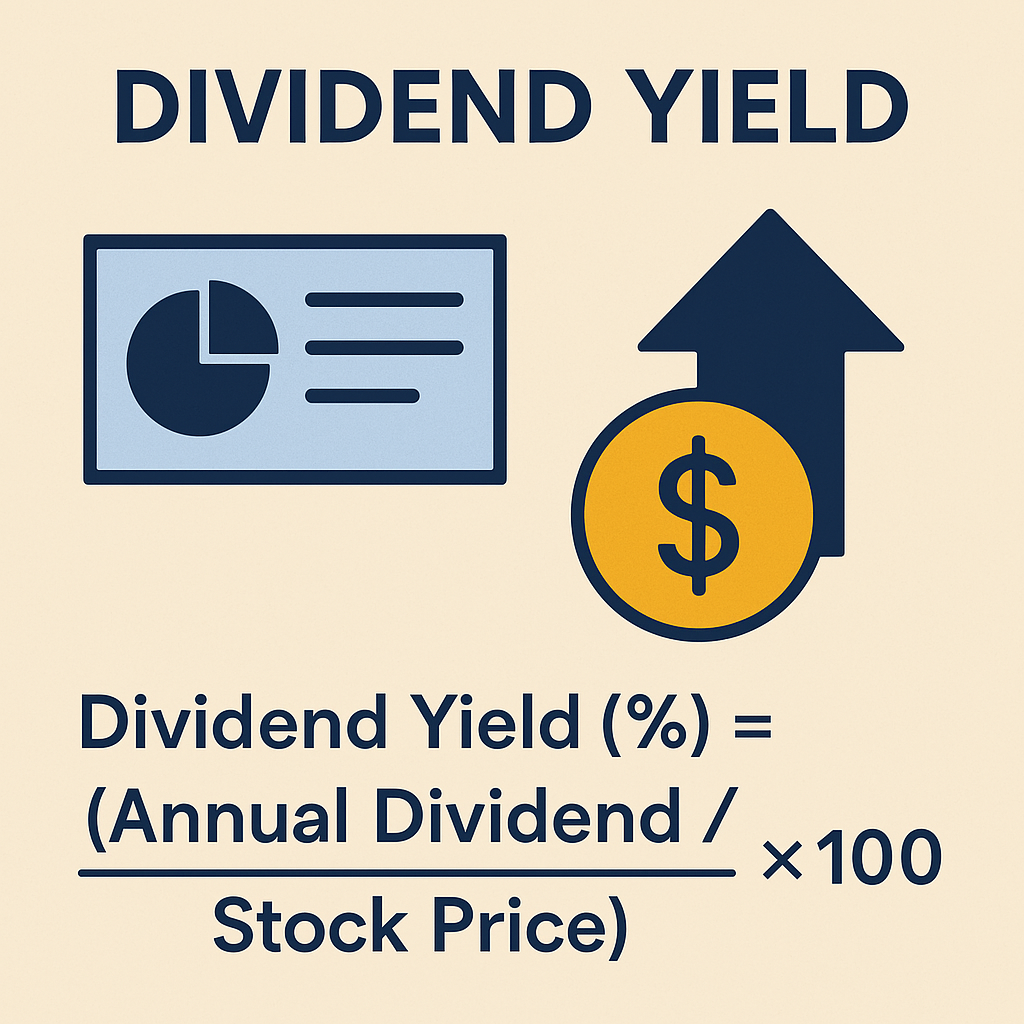
The dividend yield is a financial ratio that shows how much a company pays in dividends each year relative to its stock price. It is expressed as a percentage and indicates the return an investor can expect from dividends alone.
Formula:
Dividend Yield=(Annual Dividend Per ShareStock Price Per Share)×100\text{Dividend Yield} = \left( \frac{\text{Annual Dividend Per Share}}{\text{Stock Price Per Share}} \right) \times 100
For example, if a company pays an annual dividend of ₹10 per share and the stock price is ₹200, the dividend yield would be: (10/200)×100=5%(10 / 200) \times 100 = 5\% This means an investor earns a 5% return annually in the form of dividends.
Why is Dividend Yield Important?
Investors consider dividend yield for several reasons:
- Steady Passive Income – Dividend-paying stocks provide a consistent income stream, making them ideal for retirees or conservative investors.
- Lower Risk During Market Volatility – High-dividend stocks tend to be from stable companies, reducing overall portfolio risk.
- Compounding Growth – Reinvesting dividends helps grow wealth exponentially over time.
- Indicator of Company Health – A sustainable and growing dividend often signals a financially strong company.
Factors Affecting Dividend Yield
Several factors influence dividend yield:
- Stock Price Fluctuations – Since yield is calculated based on stock price, a drop in stock price increases yield (and vice versa).
- Company Profitability – Profitable companies can afford to pay higher dividends.
- Industry Trends – Some industries, like utilities and REITs, generally offer higher dividend yields than tech companies.
- Payout Ratio – A very high payout ratio (>80%) can indicate that a company is distributing most of its earnings, leaving little room for reinvestment.
High Dividend Yield vs. Dividend Growth Stocks
Investors often face a choice between:
- High-Yield Stocks: Companies that pay high dividends but may have limited growth potential.
- Dividend Growth Stocks: Companies that consistently increase dividends over time, often providing better long-term returns.
Example: A stock with a 10% yield might seem attractive, but if its dividend is unsustainable, the yield may decrease in the future. On the other hand, a stock with a 3% yield but a 10% annual dividend growth rate could be more rewarding over time.
How to Find Good Dividend Stocks?
Here are some key metrics to evaluate dividend stocks:
- Dividend Yield – Should be reasonable (typically 2%-6%) and sustainable.
- Payout Ratio – The ratio of dividends paid to net earnings. A 40%-60% payout ratio is considered ideal.
- Dividend History – Companies with a long history of paying and increasing dividends (like Dividend Aristocrats) are more reliable.
- Earnings Growth – Growing profits ensure dividends can be maintained or increased.
- Debt Levels – High debt can impact a company’s ability to pay dividends.
- Industry Trends – Sectors like utilities, FMCG, REITs, and financials generally offer better dividend stability.
Best Dividend Yield Stocks in India and the USA
Top Indian Dividend Stocks (as of 2025)
- HDFC Bank – Stable dividends with consistent growth.
- TCS – Strong earnings and steady payouts.
- ITC – One of India’s best high-yield dividend stocks.
- Coal India – High-yielding stock with government backing.
- Power Grid Corporation – Consistent payouts and a high dividend yield.
Top US Dividend Stocks (as of 2025)
- Johnson & Johnson (JNJ) – A Dividend Aristocrat with decades of growth.
- Procter & Gamble (PG) – Reliable and steady payouts.
- McDonald’s (MCD) – Regular dividend growth.
- Coca-Cola (KO) – Consistent dividend payer for over 50 years.
- Realty Income (O) – A Monthly dividend payer with stable returns.
Risks of Investing in High-Dividend-Yield Stocks
While high-yield stocks may seem attractive, they come with risks:
- Dividend Cuts – Companies struggling financially may reduce or eliminate dividends.
- Stock Price Decline – A high yield may indicate a falling stock price, which can be a warning sign.
- Economic Downturns – In recessions, companies may cut dividends to conserve cash.
- Overleveraging – Companies with high debt may struggle to maintain dividend payments.
- Inflation Impact – If dividend growth does not keep up with inflation, real returns decline.
How to Build a High-Yield Dividend Portfolio
To create a stable dividend income portfolio:
- Diversify Across Sectors – Avoid overconcentration in one industry.
- Reinvest Dividends – Use a Dividend Reinvestment Plan (DRIP) to compound returns.
- Focus on Dividend Growth – Companies with growing dividends provide long-term stability.
- Monitor Payout Ratios – Ensure dividends are sustainable.
- Balance Yield and Growth – A mix of high-yield and dividend growth stocks is ideal.
Conclusion
Dividend yield is a powerful tool for passive income and wealth creation. However, blindly chasing high yields can be risky. Smart investors analyze financial health, payout ratios, and long-term growth prospects before investing. A balanced approach that combines stable dividend-paying stocks and dividend growth stocks can ensure both steady income and capital appreciation. Always conduct thorough research and stay updated with market trends to make informed investment decisions.

Leave a Reply