

In the ever-fluctuating world of investing, one principle has stood the test of time: diversification. For seasoned investors and beginners alike, building a diversified portfolio is not just a suggestion; it’s a fundamental strategy for achieving long-term financial success. But what exactly does it mean to diversify your portfolio? And more importantly, how can you effectively implement it to secure your financial future?
This blog post will walk you through the meaning of a diversified portfolio, why it’s crucial, how to build one, and common pitfalls to avoid. Whether you’re just starting your investment journey or reevaluating your current strategy, understanding the power of diversification can make all the difference.
What Is a Diversified Portfolio?
At its core, a diversified portfolio is an investment strategy that involves spreading your investments across various asset classes, industries, and geographical regions to reduce risk. Rather than putting all your eggs in one basket, you distribute them across many. This way, if one investment performs poorly, others may balance out the loss.
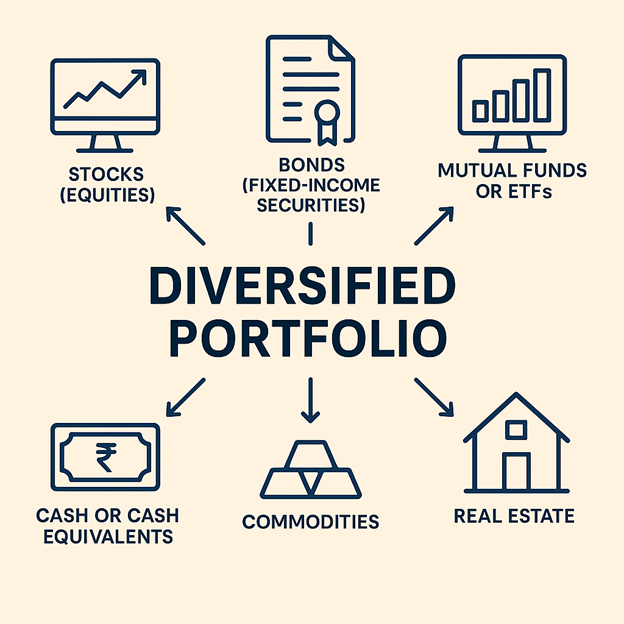
A well-diversified portfolio typically includes a mix of the following:
- Stocks (Equities)
- Bonds (Fixed-income securities)
- Mutual Funds or ETFs
- Real Estate
- Commodities (Gold, Silver, Oil, etc.)
- Cash or Cash Equivalents
- Cryptocurrencies (for more risk-tolerant investors)
Diversification can occur at several levels:
- Asset class level: Investing in different types of assets.
- Sector level: Spreading across industries (technology, healthcare, energy, etc.).
- Geographical level: Including international markets along with domestic ones.
Why Diversification Matters?
The most compelling reason to diversify is risk reduction. No investment is without risk, but diversification helps to mitigate those risks.
1. Reduces Volatility
Markets can be unpredictable. When one sector experiences a downturn, another might be booming. For instance, while tech stocks may dip due to regulatory concerns, healthcare might surge due to innovation or increased demand. A diversified portfolio ensures that a decline in one area doesn’t wipe out your entire investment.
2. Enhances Return Potential
While diversification primarily aims to manage risk, it also enhances the chance of higher returns. By investing in a variety of assets, you open up opportunities in sectors or regions that may outperform.
3. Protects Against Market Timing
Timing the market is notoriously difficult, even for professional investors. Diversification allows you to maintain steady exposure to the market without needing to predict short-term movements.
4. Provides Financial Stability
During economic downturns, having a diversified portfolio ensures that you won’t be overly reliant on one income stream. This financial buffer offers peace of mind, which is just as valuable as monetary returns.
How to Build a Diversified Portfolio?
Constructing a well-balanced and diversified portfolio involves more than randomly selecting a few stocks or funds. It requires strategy, patience, and periodic reevaluation. Let’s break down the steps.
1. Assess Your Risk Tolerance
Before choosing any investment, you must understand your risk appetite. Are you a conservative investor aiming to preserve capital, or are you comfortable with higher volatility for potentially higher returns?
Generally:
- Younger investors with a longer time horizon may lean towards equities.
- Older individuals or those nearing retirement may prefer bonds and income-generating assets.
2. Set Clear Financial Goals
Are you investing for retirement, a house, your child’s education, or wealth creation? Each goal may warrant a different investment strategy. Short-term goals require low-risk, liquid investments, whereas long-term goals allow for more aggressive growth.
3. Choose Your Asset Allocation
Asset allocation is the process of deciding what percentage of your portfolio should go into each asset class.
A common rule of thumb is:
100 minus your age = percentage to invest in stocks.
So, if you’re 30 years old, 70% might go into equities, while the remaining 30% could be in bonds and other stable assets.
However, this is just a guideline. Your personal goals, income, and risk tolerance should guide your choices.
4. Diversify Within Asset Classes
Once you’ve decided how much to invest in each asset class, it’s important to diversify within those classes as well.
Stocks:
- Choose companies from different industries (tech, retail, finance, healthcare, etc.).
- Invest in companies of varying sizes (large-cap, mid-cap, small-cap).
- Include both domestic and international stocks.
Bonds:
- The mix of government, corporate, and municipal bonds.
- Include short-term and long-term bonds.
- Consider different credit ratings (high-grade vs. high-yield).
Real Estate and Commodities:
- REITs (Real Estate Investment Trusts) offer exposure to real estate without the need to buy physical properties.
- Commodities can be accessed via ETFs or mutual funds focusing on gold, silver, oil, etc.
Mutual Funds or ETFs:
- Choose index funds or sector-specific ETFs to gain broad exposure.
- Consider actively managed funds for specialized strategies.
5. Consider Geographical Diversification
Investing in international markets provides access to growing economies and helps hedge against domestic market volatility. Global diversification can also protect against currency fluctuations and regional downturns.
For example, if the U.S. economy slows down, markets in Asia or Europe may still perform well, balancing your overall portfolio.
Real-Life Example of a Diversified Portfolio
Let’s say Alex is a 35-year-old investor with moderate risk tolerance. Here’s how he might allocate his ₹10,00,000 portfolio:
| Asset Class | Allocation | Amount (₹) | Details |
| Stocks | 50% | 5,00,000 | Indian large-cap, mid-cap, international stocks via ETFs |
| Bonds | 20% | 2,00,000 | Govt bonds, corporate debt |
| Mutual Funds | 10% | 1,00,000 | Sectoral and diversified funds |
| Real Estate | 10% | 1,00,000 | REITs |
| Commodities | 5% | 50,000 | Gold ETFs |
| Cash | 5% | 50,000 | Fixed deposits or savings accounts |
This portfolio ensures exposure to growth, income, stability, and liquidity. Moreover, it aligns with Alex’s financial goals and risk appetite.
Rebalancing: The Forgotten Step
Diversification isn’t a one-time task. Over time, the value of your assets may change, skewing your original allocation. Regular rebalancing helps realign your portfolio with your goals.
Let’s say your stocks outperform and now make up 65% of your portfolio instead of 50%. While it’s tempting to let them ride, this increases your exposure to market risk. Rebalancing- by selling some stocks and buying underweighted assets- brings the portfolio back into balance.
You can rebalance:
- Annually (once a year)
- Threshold-based (when an asset class deviates by more than a set percentage)
Common Mistakes to Avoid
Even with the best intentions, investors often make mistakes while attempting to diversify. Here’s what to watch out for:
1. Overdiversification
While diversification is crucial, spreading yourself too thin can dilute returns. Owning 50 different mutual funds with similar holdings doesn’t provide much benefit.
2. Lack of Understanding
Investing in assets you don’t understand- just for the sake of diversification- is risky. Always research before diving in.
3. Neglecting Asset Correlation
Some assets tend to move in the same direction. Diversification only works when you combine uncorrelated assets. For example, investing in two different airline companies doesn’t diversify your risk if fuel prices rise.
4. Emotional Decisions
Fear and greed often cloud judgment. A diversified portfolio helps reduce panic during downturns, but you must also stay disciplined and stick to your plan.
Tools and Resources for Diversification
To effectively manage a diversified portfolio, consider using:
- Portfolio trackers like Zerodha Console, Groww, Kuvera
- Asset allocation calculators
- Robo-advisors that automate diversification
- Investment blogs, podcasts, and financial news sites to stay updated
Knowledge is power, and in investing, staying informed can significantly impact your success.
Conclusion: A Balanced Approach for Long-Term Success
In conclusion, building a diversified portfolio isn’t just a strategy- it’s a mindset. It reflects a commitment to prudence, patience, and long-term growth. By balancing your investments across asset classes, sectors, and geographies, you protect yourself from the unpredictable nature of markets while opening doors to new opportunities.
Don’t aim to predict the next big thing. Instead, aim to create a portfolio that weathers storms and thrives in sunshine. Keep your goals clear, review your portfolio regularly, and remember: in investing, slow and steady often wins the race.

Leave a Reply